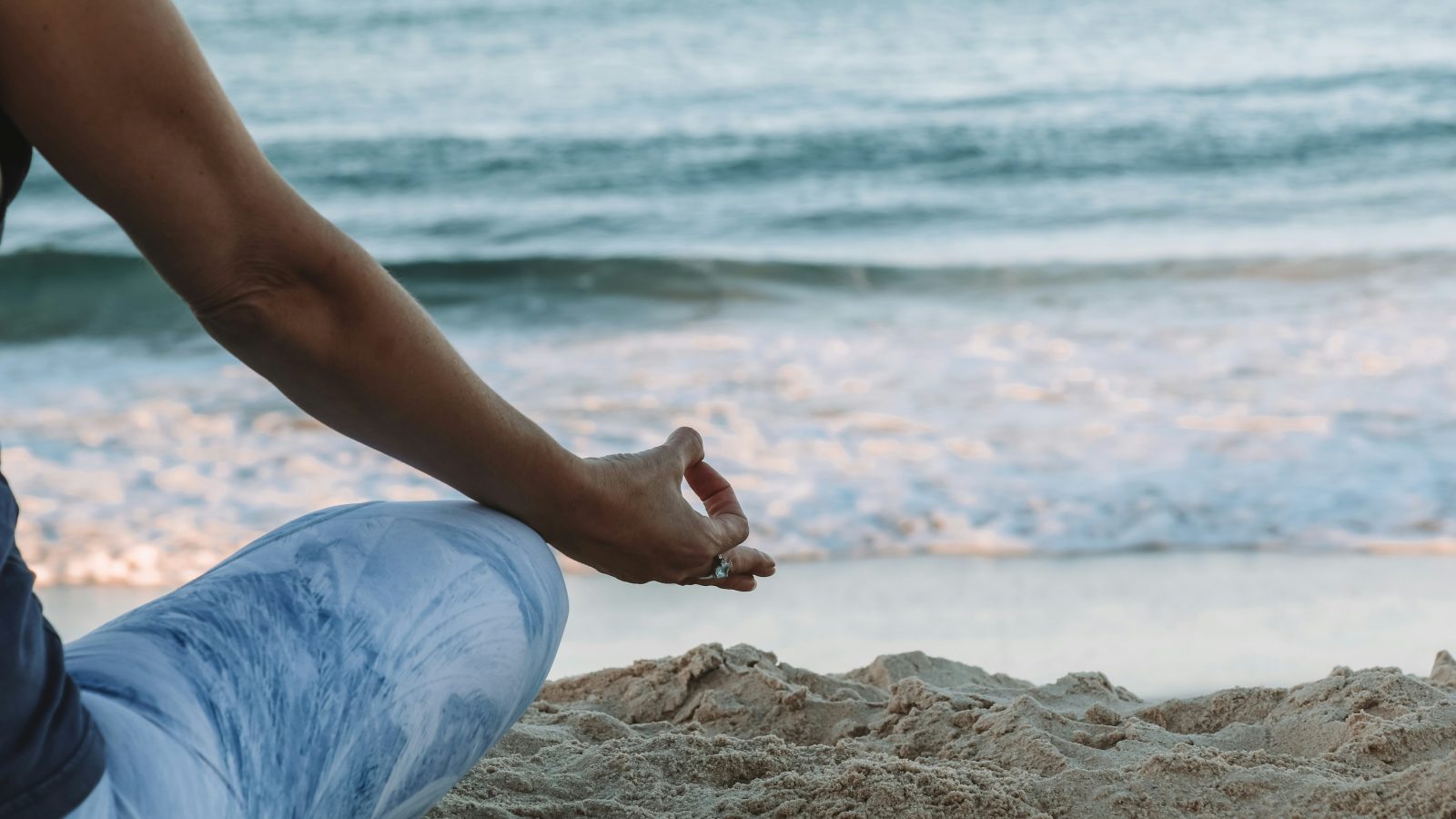
There is a familiar image of morning yoga that has become almost inseparable from the practice itself: the sun coming through the window, the mat positioned somewhere peaceful and, within minutes, someone moving smoothly through forward folds, planks, upward-facing dogs and downward-facing dogs before beginning another round of Sun Salutations. It is graceful, efficient and undoubtedly enjoyable for many people, but it has never been the part of yoga that particularly appeals to me. In the morning, I would much rather stretch.
I do not necessarily want to generate heat quickly, count repetitions or move continuously through a predetermined sequence before I have properly discovered how my body feels that day. I prefer to begin slowly, finding the places that have become stiff during the night and giving my back, hips, shoulders and legs time to move before asking very much of them. Some mornings this develops into a longer practice; on others, twenty minutes of stretching is quite sufficient. What matters to me is not completing a particular sequence but leaving the mat feeling more comfortable, mobile and ready for the day than when I arrived. This is a companion in spirit to restorative yoga, which makes a similar case for doing less.
This quieter approach can sometimes feel as though it needs defending, because contemporary yoga culture has made flowing sequences so visible, particularly online. Yet yoga is much broader than a succession of photogenic postures performed at speed, and there is no requirement to begin the morning with Surya Namaskar simply because it is traditionally associated with greeting the day. Sun Salutations can be valuable for people who enjoy them, but a practice that suits somebody else’s body, temperament and morning routine does not automatically have to become part of ours. For me, the pleasure of morning yoga lies precisely in removing that sense of obligation.
Waking the body rather than working it
After several hours of sleep, the body can feel remarkably different from the one we took to bed, having spent a long period relatively still, so that muscles and joints that moved freely the previous afternoon may initially feel reluctant to do very much at all. The natural instinct can be to attack that stiffness with a deep stretch, but I find it much more pleasant to think of the first part of morning yoga as an exploration rather than an attempt to achieve flexibility. There is good physiological reason not to confuse the sensation of stretching with a requirement to push as far as possible, because flexibility is influenced by the properties of muscles and connective tissues but also by the nervous system and our tolerance of a particular position; a stretch does not need to become painful in order to be useful.
Instead, the first few minutes can simply answer a question: how do I feel this morning? Perhaps yesterday involved several hours at a computer and the upper back feels restricted, or a long walk has left the calves making their presence known, or everything feels loose enough that only a brief practice is needed. Allowing the sequence to respond to those differences is one of the things I enjoy most about practising this way, because the body rather than the routine determines where the attention goes. The purpose is not to prove that yesterday’s flexibility is still available; it is simply to begin moving again.
Beginning on the floor
I prefer morning yoga to begin close to the ground, either sitting comfortably or lying on my back, rather than standing at the top of the mat ready to launch immediately into a sequence, because starting on the floor removes much of the expectation that anything needs to be performed and allows the first movements to be extremely small. Lying on the back with the knees bent and the feet resting on the mat is enough: from there the knees can move gently from one side to the other while the shoulders stay relaxed, the ankles can be circled, one knee and then the other can be drawn comfortably towards the chest, and the arms can travel slowly overhead if that feels pleasant. None of these needs to be held for a prescribed number of breaths, because the intention at this stage is simply to notice where movement feels available and where there is resistance.
Drawing both knees towards the body can then create a little more movement through the lower back, particularly with a gentle rocking from side to side, though I prefer to hold the legs loosely rather than pulling them tightly, because the difference between a pleasant sense of length and an aggressive stretch can be surprisingly small first thing in the morning. Allowing the knees to move towards one side creates an easy reclining twist, and I would rather spend several comfortable breaths there than force the knees towards the floor, particularly because the range often increases naturally after a little time. By the time I leave the floor, I want the body to feel as though it has already begun the day.
Giving the spine time to move
Coming onto hands and knees introduces more movement without requiring a sudden transition into a strenuous posture. Cat-Cow is useful here, although I prefer to treat it as an opportunity to explore the spine rather than a mechanical exercise in which every repetition looks identical: the pelvis can initiate the movement with the rest of the spine following gradually, while the neck stays comfortable rather than being thrown dramatically backwards. After several repetitions, small circles through the hips or gentle shifts forwards and backwards change the sensation considerably, and moving the hips towards the heels and back begins to involve the ankles, knees, hips and shoulders while the hands and knees still support much of the body’s weight.
This is one of the characteristics I particularly like about a stretching-based practice: postures do not have to exist as isolated shapes but can become starting points from which we investigate movement. A small shift of the hips, a change in the position of the hands or a slightly different angle through the torso can reveal a stretch far more useful than reproducing the textbook version of an asana perfectly. Morning yoga becomes considerably more enjoyable when curiosity replaces performance.
Staying in Child’s Pose
Child’s Pose is frequently treated as somewhere to rest between more demanding parts of a class, but in a slower morning practice I think it deserves considerably more attention. Allowing the hips to settle towards the heels while the arms extend forwards gives the back, shoulders and sides of the torso an opportunity to lengthen without demanding a large range of movement, and there is no reason to hurry onwards simply because the posture is conventionally regarded as a transition. Spending several minutes here, perhaps walking both hands gently towards one side and then the other, can reveal where stiffness has accumulated overnight and allow it to ease gradually; if the forehead does not comfortably reach the floor, supporting it on folded arms, a cushion or a block is entirely sensible. The position can also be adapted by separating the knees or altering the arms, and this is another place where personal comfort should take precedence over reproducing an idealised shape, because anatomical proportions differ and yesterday’s body can feel surprisingly unlike today’s.
Shoulders before the computer
For anyone who expects to spend much of the day at a desk, the shoulders and upper back are worth some deliberate attention before they settle into several hours of restricted movement. I like to begin with slow shoulder circles and gentle movements of the arms before progressing into anything stronger, because the objective is to restore comfortable movement rather than force the shoulder joint towards an arbitrary range. From a comfortable kneeling or seated position, interlacing the fingers and reaching the hands forwards creates a pleasant broadening across the upper back, while opening the arms afterwards shifts the emphasis towards the chest, and Eagle arms offer another option if that suits the shoulders. Thread-the-Needle is particularly useful because it combines movement through the shoulder with rotation through the thoracic spine, one arm passing gently beneath the other as the shoulder and side of the head move towards the mat, held comfortably rather than forced. I find this kind of movement especially useful in the morning because it acknowledges what many of our bodies will actually be asked to do during the day: yoga does not have to prepare us for increasingly difficult yoga, but can simply prepare us for ordinary life.
Giving the hips time rather than force
Hip flexibility attracts a peculiar amount of ambition, because progress appears easy to measure when a knee moves closer to the floor or a posture begins to resemble the photograph that inspired it, yet the structure of the hip joint varies substantially between individuals and forcing every body towards the same external shape is neither necessary nor sensible. For a morning practice I prefer positions in which the body is well supported and the intensity can be adjusted easily: a reclining figure-four stretch is particularly useful because the floor supports the spine while the position of the legs determines how much sensation develops around the hip, and crossing one ankle over the opposite thigh may already be sufficient. Later, a low lunge introduces a different kind of hip movement, and rather than dropping immediately into the deepest position available, moving gently forwards and backwards allows the body to explore the range gradually, shifting the hips back to bring in the hamstrings and returning forwards to bring the attention to the front of the hip. I find that movement between positions more satisfying in the morning than holding one enormous stretch, because it lets several structures participate gradually and gives the nervous system time to become accustomed to a range rather than treating flexibility as something to be imposed.
Letting the hamstrings join in gradually
The classic image of yoga often includes a beautifully straight-legged forward fold with the hands resting effortlessly on the floor, but that is not a useful standard against which to judge a morning practice. By the time the spine and hips have been moving for ten or fifteen minutes, the hamstrings generally feel much more receptive than they would immediately after getting out of bed, so from a low lunge, shifting backwards and gradually straightening the front leg until a comfortable stretch appears is enough; the knee can stay bent, the hands can rest on blocks, and there is no particular virtue in reaching the toes. When eventually coming to standing, I prefer a forward fold with generously bent knees and a relaxed upper body, allowing the pelvis and spine to find a comfortable relationship without making straight legs the objective. The important part is the sensation rather than the appearance: if the backs of the legs feel gradually less resistant and standing afterwards feels freer, the stretch has done what I wanted from it.
Morning yoga without Surya Namaskar
By this point the spine has moved through several directions, the shoulders have received some attention, the hips have gradually opened and the backs of the legs have begun to lengthen, so the body is warmer than when the practice began even though nothing has resembled a conventional Sun Salutation, and for me nothing is missing. Surya Namaskar has an important history within modern postural yoga and can combine movement, strength, flexibility and breath into an elegant sequence, which is why it is so widely used in Vinyasa and other flowing styles, but recognising its usefulness does not mean that every practitioner needs to enjoy it. There is a broader point here about wellbeing practices generally: something can be beneficial without being beneficial for us in the form in which it is usually presented. If repeatedly moving through Sun Salutations makes somebody eager to get onto their mat every morning, that is an excellent reason to continue; if the same prospect makes another person postpone yoga altogether, there is little wisdom in insisting upon it merely because it has become conventional. Consistency is easier when the practice itself is something we look forward to.
Adding a little balance
Once the body feels comfortably mobile and I am standing, I like to include a small amount of balance work, because balance introduces a different quality to the practice: it requires attention without necessarily requiring exertion, and even a familiar posture can feel completely different from one morning to another. Tree Pose is perfectly adequate for this, with the lifted foot resting low against the ankle or calf rather than travelling high onto the thigh, and using a wall for occasional support does not somehow invalidate the posture; the interesting part is the continuous series of tiny adjustments made by the standing foot, ankle, leg and torso while the eyes hold a steady point of focus. There is no need for this to become an endurance exercise, and on mornings when balance feels unexpectedly poor, that information can simply be accepted rather than interpreted as failure. Yoga becomes much kinder when every variation in performance stops requiring a judgement.
Finishing more slowly than we began
A quiet morning practice deserves a quiet ending. After standing stretches and balance work, returning to the mat for a final seated position or lying on the back for several minutes creates a natural boundary between yoga and whatever comes next, and this does not need to become a lengthy meditation unless that is something you enjoy. The interesting part is noticing the contrast between how the body feels now and how it felt at the beginning: whether the shoulders rest differently, whether turning the head feels easier, whether the hips feel less restricted or whether the breath simply feels more settled. Some mornings the difference will be obvious and on others almost imperceptible, but that does not make the latter practice unsuccessful, because bodies are not machines into which twenty minutes of yoga can be inserted in exchange for a guaranteed quantity of flexibility. The practice is the process rather than the result.
A twenty-minute morning practice
Although I do not particularly want a rigid sequence, it can still be useful to have a loose structure for mornings when deciding what to do feels like unnecessary work, so I think about the practice in broad phases rather than individual postures. Spend the first few minutes lying down and introducing small movements through the spine and hips; move onto hands and knees for Cat-Cow, gentle rotations and Child’s Pose; give several minutes to the shoulders and upper back; gradually introduce the hips and hamstrings through figure-four stretches and low lunges; and finish standing with an easy forward fold and a little balance before returning briefly to the floor. That structure can occupy twenty minutes or expand naturally into forty, with a position that feels particularly useful given more time and something that feels wrong that morning simply omitted, because the structure exists to support the practice rather than control it.
On mornings when there are only five minutes
A personal yoga practice also needs to survive mornings when there is not enough time for the ideal version, and if the only realistic choice is five minutes of movement or nothing, I would rather have the five minutes. A brief practice might consist of lying on the mat and moving the knees gently from side to side, bringing the knees towards the chest, coming onto hands and knees for several slow Cat-Cow movements and then spending a little time in Child’s Pose before standing; another morning might involve nothing more complicated than shoulders, hips and a comfortable forward fold. This flexibility matters because routines that depend upon perfect circumstances tend not to last: if yoga requires the correct clothes, forty uninterrupted minutes, a complete sequence and an appropriately peaceful state of mind, ordinary life will provide endless reasons not to do it, whereas a mat on the floor and a few minutes of movement create a much lower threshold. The longer practice can then remain something to enjoy when time allows rather than the minimum required for the morning to count, a principle we return to in the Sunday skin ritual.
Stretching is not a competition
Perhaps the most useful lesson I have taken from approaching yoga this way is that flexibility is a poor measure of the quality of a practice. There will always be somebody who can fold further, rotate more deeply or place a limb somewhere anatomically improbable, and that tells us remarkably little about whether their practice is more useful to them than ours is to us. The ability to notice discomfort before it becomes pain, adjust a position without embarrassment and decide that a particular posture is unnecessary may represent a more mature relationship with movement than forcing the body into increasingly dramatic shapes. This becomes particularly important as yoga becomes a long-term practice, because bodies change with age, activity, injury, work and sleep, and a practice based upon listening can change with them, while one based entirely upon achieving external shapes may eventually become a source of frustration. Morning stretching offers a wonderfully uncomplicated alternative: we arrive with whatever body we have that morning, move it carefully for a while and then carry it into the rest of the day.
A different kind of morning ritual
There is something I like about beginning the day without immediately asking the body to perform. Before the computer, before the messages, before the day’s obligations begin to accumulate, there is a small period in which the only task is to move slowly enough to notice what movement feels like, whether that means spending longer with the hips, or the shoulders and back, or a practice that is little more than a luxurious stretch. I do not think yoga needs to be made harder than that in order to be worthwhile. Sun Salutations will continue to be an important and much-loved part of yoga for many people, and nothing here argues otherwise; they simply do not need to become the compulsory architecture of everybody’s morning practice. For those of us who would rather stretch, there is an equally satisfying ritual available: begin on the floor, move gently, follow the places that need attention, gradually make your way towards standing and give the body enough time to feel awake. Then roll up the mat and get on with the day. You can find more in this spirit throughout Living Well.
A personal note, and a disclaimer
This article is a personal account of how I like to begin the day. It describes my own preferences and the way I choose to move, and it is not instruction, a taught sequence, a therapeutic programme or advice of any kind, medical or otherwise. Nothing here is intended to diagnose, treat or manage any condition, and it should not be taken as a substitute for guidance from an appropriately qualified yoga teacher or healthcare professional who can see your body and understand your circumstances.
Stretching should produce a manageable sensation of tension rather than sharp, electrical or persistent pain, and there is never a need to force a joint towards its maximum range. Anyone with an injury, significant joint instability, recent surgery, persistent pain, neurological symptoms, pregnancy or any condition affecting safe movement should seek individual guidance from a suitably qualified professional rather than relying upon a general description like this one. Morning practice is also a good place to respect the fact that flexibility varies from day to day: the range available yesterday is not a target that has to be reproduced today, and if anything feels wrong, the right response is to stop.