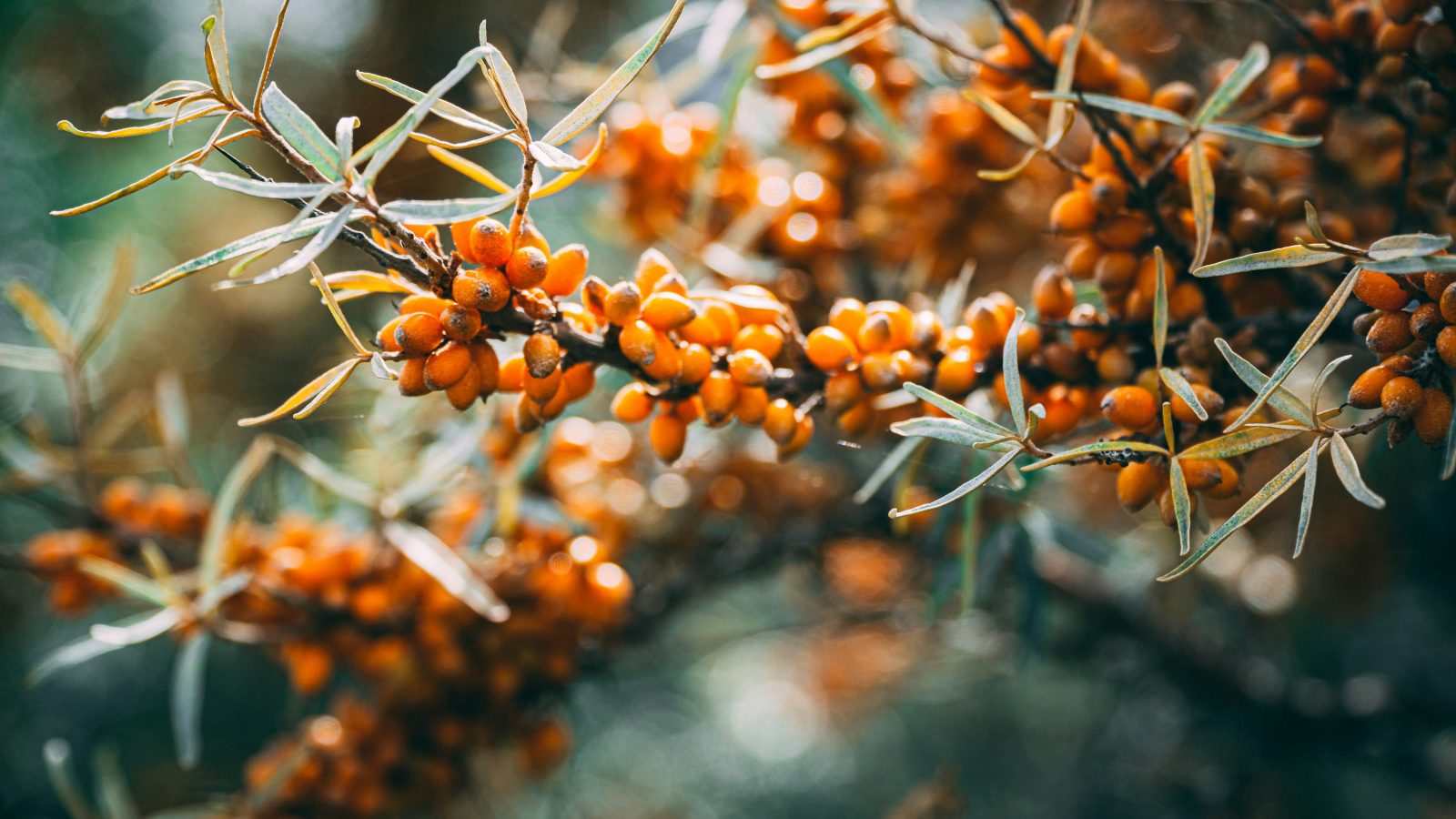
There are fruits that seem designed to be eaten directly from the plant, and then there is sea buckthorn. A ripe strawberry requires very little negotiation and a raspberry picked warm from the garden hardly needs improving, whereas sea buckthorn offers a rather different experience: its spectacular orange berries promise sweetness but deliver an immediate, mouth-puckering acidity that explains why generations of cooks across its enormous Eurasian range have so often chosen to process the fruit rather than eat handfuls of it raw.
That intensity is precisely what makes sea buckthorn so interesting in the kitchen. Once tempered with a little sweetness its acidity becomes refreshing rather than aggressive, while its distinctive fruitiness works particularly well alongside citrus, and orange is an obvious companion because it extends the bright character of the berry without disguising it. The result is a loose breakfast compote that sits somewhere between a fruit sauce and a soft preserve, which I particularly like spooned over thick natural yoghurt or porridge, where the creaminess gives the acidity something to work against. As with the lavender biscuits, I do not think the recipe needs to become a nutritional argument simply because the principal ingredient is botanically interesting; sea buckthorn’s fascinating composition belongs in the Botanical Library monograph, but here it is a berry, and our job is to make it taste good.
Makes
One 400 to 500 ml jar
Cook
10 to 15 min
Keeps
About 1 week, refrigerated
Freezer
Yes, in small portions
Ingredients
- 250 g sea buckthorn berries, fresh or frozen
- 1 large orange, preferably unwaxed
- 75 to 100 g soft light brown or granulated sugar, to taste
- 2 tbsp water
- A small pinch of fine sea salt
If the sea buckthorn is frozen there is no need to thaw it before beginning; frozen berries are often considerably easier to obtain than fresh ones and work perfectly well in a cooked compote.
Method
-
Combine the fruit
Finely grate the zest from about half the orange, taking only the fragrant orange surface rather than the bitter white pith beneath. Juice the whole orange and place the juice and zest into a small heavy-based saucepan with the sea buckthorn berries, 75 g of the sugar, the water and a very small pinch of salt.
-
Simmer gently
Bring everything slowly towards a simmer over a low-to-medium heat. As the berries warm they will soften and release their juice, producing a brilliantly coloured mixture that initially looks more liquid than the finished compote. Stir occasionally and press some of the berries gently against the side of the pan with a wooden spoon, but do not feel obliged to destroy all of them, because leaving some fruit intact gives a much nicer texture. Simmer for about 10 to 15 minutes, until the berries have softened and the liquid coats the back of a spoon, stopping before it reaches the consistency you ultimately want, because it thickens further as it cools.
-
Taste and adjust
Taste carefully once it has cooled enough to do so. Sea buckthorn varies enormously in acidity, which is why I would rather give a range for the sugar than pretend every batch needs precisely the same amount; if it remains aggressively sour, add the remaining sugar a little at a time and return it briefly to the heat until dissolved. The final flavour should still possess a definite sharp edge, because if all the acidity has disappeared beneath sugar we have rather missed the point of using sea buckthorn.
Smooth or rustic?
I prefer this as a relatively rustic compote, but sea buckthorn contains seeds and fibrous material that some people may prefer not to have in the finished dish. For a smoother version, cook the fruit as described and then push the warm mixture through a fine sieve before returning it briefly to the pan to adjust the consistency. The sieved version is particularly good as a sauce for yoghurt, cheesecake, panna cotta or ice cream because it produces an intensely coloured, glossy finish, while the unsieved version feels more appropriate for breakfast, where the texture of the fruit is part of its character. Neither is more authentic than the other; they are simply two useful ways of treating a berry that can be rather demanding in its natural state.
Keeping it
This is a refrigerator compote rather than a tested shelf-stable preserve, so do not treat it as suitable for storing indefinitely in a cupboard. Transfer it to a clean container, cool and refrigerate it promptly, and use it within about one week, always taking portions with a clean spoon. It also freezes very successfully in small portions; an ice-cube tray is particularly useful if you mainly want spoonfuls for porridge or yoghurt.
A few variations, and a bright breakfast
A small piece of fresh ginger can be simmered with the berries for a warmer version as autumn progresses, while a little vanilla produces something softer and more dessert-like, and apple is another excellent companion that can turn the recipe into a more substantial fruit compote, its sweetness and body moderating the acidity naturally. I would avoid adding too many spices at once, because sea buckthorn has enough personality of its own and the purpose of the orange is to frame that character rather than conceal it. There is something satisfying about allowing an ingredient to remain slightly difficult: sea buckthorn does not need to become universally sweet, smooth and familiar before it deserves a place in the kitchen, and a spoonful over warm porridge on a cold morning gives us something bright, acidic and unmistakably itself. It is also excellent stirred through the hazelnut, almond and dark chocolate granola, and there are more ideas in the Botanical Kitchen.