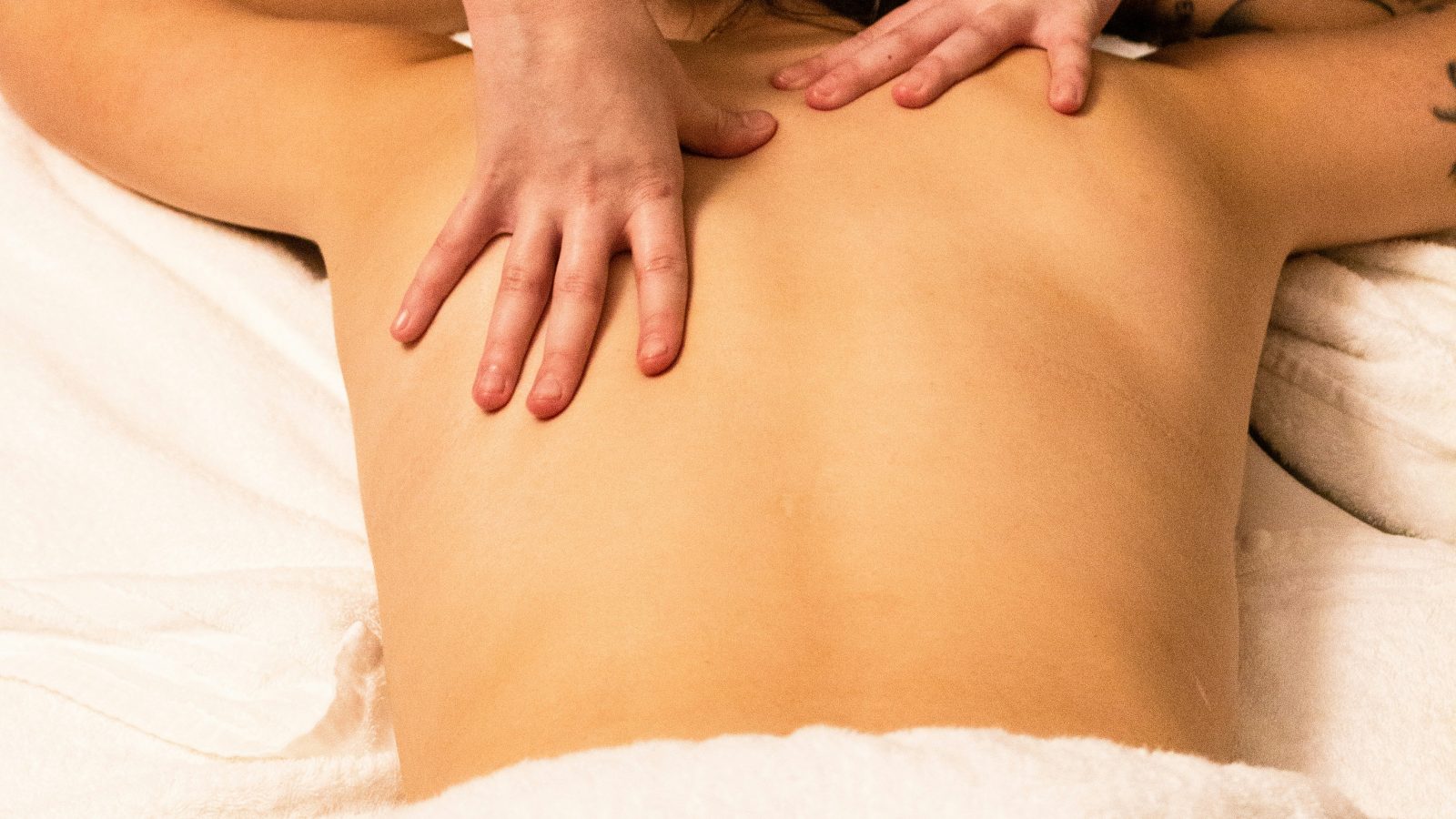
Myofascial release promises exactly what its name says: pressure applied to fascia, releasing restrictions that are supposedly binding it up. The physics of that claim do not hold together nearly as well as the marketing does, and once you understand why, the technique becomes more interesting rather than less, because the actual reasons it seems to help have very little to do with what its name implies.
What fascia actually is
Fascia is the connective tissue that wraps around muscles, organs and bones, a continuous, body-wide sheet of mostly collagen that gives shape and structural continuity to everything underneath it. It is genuinely fascinating tissue, richly supplied with nerve endings and capable of some independent contraction, but it is also, mechanically, extremely stiff. That stiffness is the whole problem with the name “myofascial release.”
The name promises more than pressure can deliver
A frequently cited mathematical modelling study calculated the forces that would actually be required to produce permanent mechanical deformation in dense fascial tissue such as the fascia lata (the thick sheet running down the outside of the thigh) or plantar fascia, and compared those figures against the pressure a hand, elbow or foam roller can realistically apply during a session. The conclusion was blunt: the palpable “release” therapists and clients report cannot be explained by actual plastic deformation of firm fascial tissue, since the pressures required are far beyond what manual therapy generates. Softer fascia, such as the fine sheet under facial skin, may genuinely deform a little under pressure; the thick fascia around major muscle groups, the tissue most self-massage tools are aimed at, essentially does not.
So does foam rolling actually do anything?
This is where the evidence gets more interesting than a simple “yes it works” or “no it doesn’t.” A 2022 systematic review of randomised controlled trials looking at the chronic, repeated use of foam rolling over time found conflicting results for flexibility, some trials showed a benefit, others did not, and no consistent benefit for athletic performance. A separate 2022 meta-analysis pooling foam rolling training studies reached a similarly mixed verdict on performance outcomes specifically. None of this means foam rolling is worthless. It means the honest summary is “sometimes helps a bit, inconsistently, for reasons that are still debated,” not “releases your fascia.”
A more honest explanation for what is actually happening
The mechanism that best survives scrutiny is neurological rather than mechanical. Fascia and the muscle beneath it are dense with mechanoreceptors, sensory nerve endings that respond to pressure and stretch. Sustained pressure from a roller, a ball or a pair of thumbs plausibly stimulates those receptors in a way that reduces protective muscle guarding, dials down excessive activity in the surrounding muscle, and produces a genuine, if temporary, sensation of looser, easier movement, alongside a real relaxation response through the nervous system. That is a legitimate and useful effect. It is just a different effect from “releasing” a physically restricted tissue, and describing it accurately matters if you want to have realistic expectations of what a five-minute session with a foam roller can and cannot do.
Where the clinical evidence is genuinely stronger: chronic low back pain
Applied clinically by a trained practitioner, myofascial release techniques have a more encouraging evidence base specifically for chronic non-specific low back pain. A systematic review and meta-analysis of the available randomised controlled trials found that myofascial release, generally used alongside other standard care rather than as a sole treatment, produced meaningful improvements in pain and disability scores. The proposed mechanism in these studies lines up with the neurological explanation above: stimulation of mechanoreceptors improving proprioception and reducing excess paraspinal muscle and sympathetic nervous system activity, rather than any literal loosening of the fascia itself.
How to actually do a self-myofascial release session
Choose a firm foam roller for larger muscle groups (the outer thigh, the upper back, the calves) or a small, firm ball, a tennis ball is a genuinely good starting point, for smaller, more specific spots such as the glutes or the sole of the foot. Roll slowly, at roughly one inch per second, rather than rapidly back and forth. When you find a spot that feels noticeably tighter or more tender, pause and hold steady pressure there for twenty to thirty seconds rather than continuing to roll over it, breathing slowly, since this is where the nervous-system settling effect described above has time to actually happen. Thirty to sixty seconds per muscle group is generally enough; longer sessions have not been shown to add proportionally more benefit.
What this is not
Self-myofascial release is not appropriate directly over acute injuries, fractures, varicose veins, or areas with active inflammation, and it should stop well short of genuine pain, a strong, tolerable discomfort is the target, not a wince. It is not a substitute for proper medical assessment of persistent or worsening back, joint or muscle pain, and it is not, whatever the name suggests, physically restructuring your connective tissue. It is a genuinely useful, low-cost self-care habit best understood as working on your nervous system’s relationship with tension, not as demolition work on your fascia.
Journal · Living Well
A Guide to Different Massage Styles
Where myofascial release fits alongside Indian head massage, facial self-massage and the rest of what we cover.
Journal · Living Well
Self-Massage While You Moisturise
A different self-massage habit, built around fluid movement and touch rather than pressure on fascia.
References
- Chaudhry, H., Schleip, R., Ji, Z., Bukiet, B., Maney, M. & Findley, T. (2008). Three-dimensional mathematical model for deformation of human fasciae in manual therapy. Journal of the American Osteopathic Association, 108(8), 379-390. PubMed
- Pagaduan, J.C., Chang, S.Y. & Chang, N.J. (2022). Chronic effects of foam rolling on flexibility and performance: a systematic review of randomized controlled trials. International Journal of Environmental Research and Public Health, 19(7), 4315. PMC8998857
- Konrad, A., Nakamura, M. & Behm, D.G. (2022). The effects of foam rolling training on performance parameters: a systematic review and meta-analysis. International Journal of Environmental Research and Public Health, 19(18), 11594. PMC9517147
- Myofascial release for chronic low back pain: a systematic review and meta-analysis. Frontiers in Medicine, 8, 697986 (2021). Frontiers