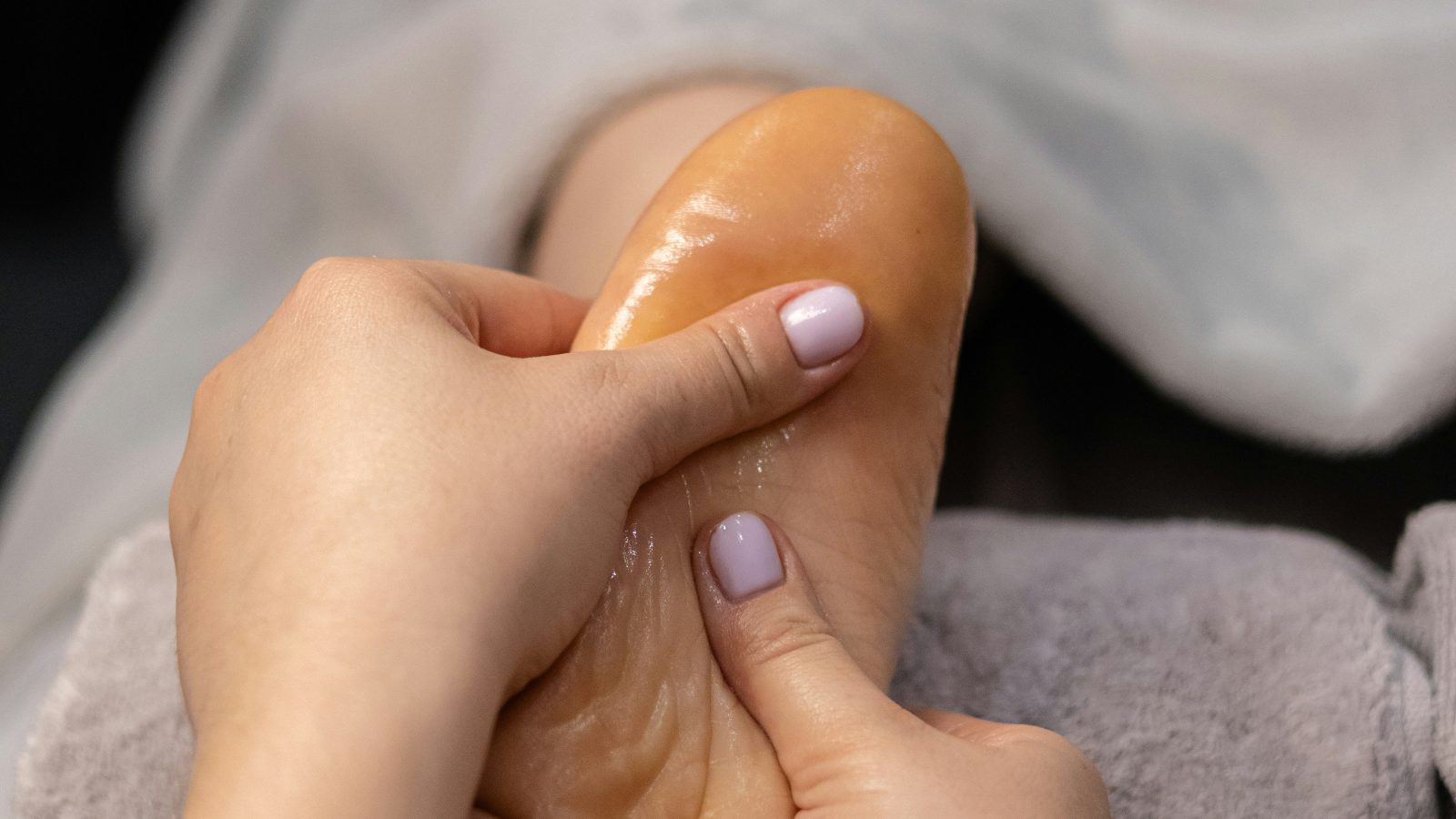
I had regular reflexology while trying to conceive, and continued through pregnancy once I found out I was expecting. I fell pregnant within three months, which I know was a short timeline compared with what many people go through, and I feel genuinely grateful for that. I am not at all sure the reflexology itself is what did it. It made me feel good, calm, and cared for during a period that can otherwise be quietly stressful, and I think that is worth being honest and specific about, separately from any claim about what it actually did to my chances of conceiving.
This is a difficult subject to write about well, because trying to conceive is emotionally loaded territory, and it is exactly the kind of situation where a therapy that made someone feel better becomes, understandably, credited with an outcome it may have had nothing to do with. I want to hold both things at once here: my own experience was genuinely positive, and the evidence for reflexology specifically causing that outcome is considerably weaker than the personal story alone would suggest. Both are true, and only looking at one of them would be dishonest.
What reflexology actually is
Reflexology is based on the theory that specific points on the feet, hands and ears correspond to other organs and systems throughout the body, with pressure applied to those points intended to produce effects elsewhere. We cover the general evidence for reflexology, and how it compares with other massage styles, in our complete guide to different massage types, and the honest, short version bears repeating here: reflexology is the style on that list with the weakest overall supportive evidence, and systematic reviews of randomised controlled trials have concluded that the best available clinical evidence does not convincingly demonstrate it to be an effective treatment for any medical condition. That general caution matters before looking at fertility and pregnancy specifically, since it sets the baseline expectation fairly.
Does reflexology actually help you conceive?
Current evidence: ★☆☆☆☆ A genuine sham-controlled trial found no clinically meaningful effect.
This is the specific claim my own experience gets closest to, and it deserves the most careful, honest treatment. A sham-controlled randomised trial specifically tested whether foot reflexology could induce ovulation in women with anovulatory infertility, comparing eight sessions of genuine reflexology against sham reflexology (gentle, non-specific foot massage) over ten weeks. Ovulation occurred in 42% of the genuine reflexology group and 46% of the sham group, and pregnancy occurred in 4 of 26 women receiving genuine reflexology compared with 2 of 22 receiving sham treatment. The trial was small, and the authors were appropriately cautious about drawing a firm conclusion from those numbers alone, but the honest reading is that genuine reflexology performed no better than a placebo-equivalent sham treatment, and any specific effect on ovulation, if one exists at all, is unlikely to be clinically meaningful.
This is worth sitting with in relation to my own story. I conceived within three months of starting to try, which is well within the range most reproductive medicine considers ordinary rather than remarkable, roughly 85% of couples conceive within a year of trying without any intervention at all, and a large proportion of those conceive within the first few cycles. Crediting reflexology for a timeline that falls comfortably within normal variation is exactly the kind of reasoning the sham-controlled trial above should make us more cautious about, however much the sessions themselves genuinely helped me feel calmer during that time.
Reflexology during pregnancy: anxiety and comfort
Current evidence: ★★☆☆☆ Probably genuinely helpful for anxiety and comfort; the trials behind that finding are still mostly low quality.
A 2023 systematic review of 13 randomised controlled trials examined reflexology’s effects across a range of pregnancy symptoms, including low back and pelvic pain, anxiety, fatigue, sleep quality and ankle or foot oedema. The honest summary is a genuinely mixed one: reflexology looked probably effective and safe for reducing anxiety, and showed some promising results for pain, but eleven of the thirteen included trials were judged high risk of bias, and the review’s own conclusion was that strong, reliable supportive evidence is not yet available, with larger, better-designed trials still needed. Evidence for sleep quality specifically was judged insufficient to draw a conclusion at all, despite some individual trials reporting statistically significant effects.
Reflexology and labour: pain, duration and satisfaction
Current evidence: ★★☆☆☆ Moderate-quality evidence for some outcomes, genuinely interesting, still preliminary.
The evidence picture improves somewhat, though not completely, when it comes to labour itself. A systematic review and meta-analysis of randomised controlled trials found moderate-quality evidence that foot reflexology relieved pain, shortened the second and third stages of labour, and increased birth satisfaction. A separate, UK-based pilot randomised controlled trial from Ulster University found a mean reduction of around 44 minutes in the second stage of labour among women who received antenatal reflexology compared with usual care, a genuinely notable, specific figure from a properly randomised (if still pilot-scale) trial. As with the pregnancy-symptom review above, the honest caveat is that this remains an encouraging but still developing evidence base, not a settled, high-confidence finding, and larger trials would be needed before treating a specific number like 44 minutes as a reliable expectation.
The “forbidden points” myth, examined honestly
Many reflexology and acupressure traditions caution against stimulating specific points, particularly around the inner ankle and heel, during pregnancy, on the theory that they can trigger uterine contractions, and some practitioners avoid them throughout pregnancy as a precaution while others use them deliberately, later in pregnancy, to try to encourage labour to start. It is worth being honest about where this claim actually stands: current scientific evidence for these specific points reliably inducing labour is limited and largely anecdotal, and systematic reviews of the broader evidence for reflexology inducing labour describe it as low-to-moderate quality and insufficient to recommend the practice as a reliable induction method. The caution some practitioners apply is a sensible, precautionary one rather than something built on strong proof of the underlying mechanism, and it cuts both ways: the same thin evidence base that makes “these points will start your labour” an overstatement also makes “these points are dangerously unsafe in early pregnancy” one, though most qualified practitioners reasonably choose caution over certainty either way. If you are pregnant and interested in reflexology, the sensible step is a practitioner specifically trained in antenatal reflexology, who will know this territory properly rather than working from general foot-massage training alone.
What I would actually say to someone trying to conceive, or newly pregnant
Reflexology very probably did not cause my pregnancy, and the sham-controlled trial above is a fairly clear, honest reason to think that. What it did do, consistently and reliably, was give me a regular, calming ritual during a period that can otherwise be quietly anxious in ways that are hard to name day to day, and there is real, if still developing, evidence that reflexology genuinely helps with pregnancy-related anxiety specifically, separate from any claim about conception itself. That distinction, between “this helped me feel better” and “this is why it worked,” is one I think is worth making honestly rather than blurring, and it does not make the sessions themselves any less worth having done. Feeling calmer and more cared for during trying-to-conceive and pregnancy is a genuinely worthwhile outcome on its own, without needing a fertility claim attached to justify it.
Journal · Living Well
A Guide to Different Massage Styles
Where reflexology sits alongside Indian head massage, myofascial release and every other style we cover, including the honest verdict on which has the weakest evidence.
Frequently asked questions
Does reflexology actually help you get pregnant?
A sham-controlled randomised trial specifically testing foot reflexology for inducing ovulation found no clinically meaningful difference between genuine and sham (placebo) reflexology. Any specific fertility effect, if one exists at all, does not appear to be reliable or clinically significant based on the best available trial evidence.
Is reflexology safe during pregnancy?
Generally, yes, when performed by a practitioner specifically trained in antenatal reflexology, who understands which approaches are appropriate at each stage of pregnancy. The traditional caution around specific “forbidden” points is a precautionary one rather than one built on strong evidence of the underlying mechanism, but a properly trained practitioner is still the sensible choice over general foot massage.
Can reflexology help induce labour?
The evidence is limited and largely anecdotal. Systematic reviews describe the trial evidence for reflexology inducing labour as low-to-moderate quality and insufficient to recommend it as a reliable induction method, though some trials have found a reduction in the duration of the second stage of labour when used antenatally rather than specifically to trigger its onset.
Does reflexology help with pregnancy anxiety?
A 2023 systematic review of 13 randomised controlled trials found reflexology probably effective and safe for reducing anxiety during pregnancy, though most of the included trials were judged high risk of bias, meaning larger, more rigorous trials are still needed before this can be considered strongly established.
How many sessions of reflexology are needed while trying to conceive?
There is no evidence-based answer to this, since the best available trial found no clinically meaningful fertility benefit from reflexology at all, genuine or sham. Anyone using it during fertility treatment or while trying to conceive is best doing so for the relaxation and self-care value, which has more support, rather than a specific number of sessions aimed at a fertility outcome.
References
- Holt, J. et al. (2009). The effectiveness of foot reflexology in inducing ovulation: a sham-controlled randomized trial. Fertility and Sterility, 91(6), 2514-2519. PubMed 18565520
- Liang, X. et al. (2023). The effects of reflexology on symptoms in pregnancy: a systematic review of randomized controlled trials. Heliyon, 9(8), e18442. PubMed 37533996
- Yang, J. et al. (2024). Effects of foot reflexology massage on pregnant women: a systematic review and meta-analysis of randomized controlled studies. Scientific Reports, 14, 51107. PMC10781947
- McCullough, J.E.M., Close, C., Liddle, S.D., Sinclair, M. & Hughes, C.M. (2017). A pilot randomised controlled trial exploring the effects of antenatal reflexology on labour outcomes. Midwifery, 55, 137-144. PubMed 29024881
- Ernst, E., Posadzki, P. & Lee, M.S. (2011). Reflexology: an update of a systematic review of randomised clinical trials. Maturitas, 68(2), 116-120. PubMed 21111551