Rose can seem an adventurous flavour only if we look at it from a particularly northern European culinary perspective. Across Persian, Middle Eastern, Ottoman and South Asian food traditions, rose water has long belonged in kitchens as well as gardens, appearing alongside nuts, spices, fruits, syrups and sweets, so the relationship between rose and food is not a contemporary wellness invention but part of a much larger culinary history, as we explore in the Rose monograph.
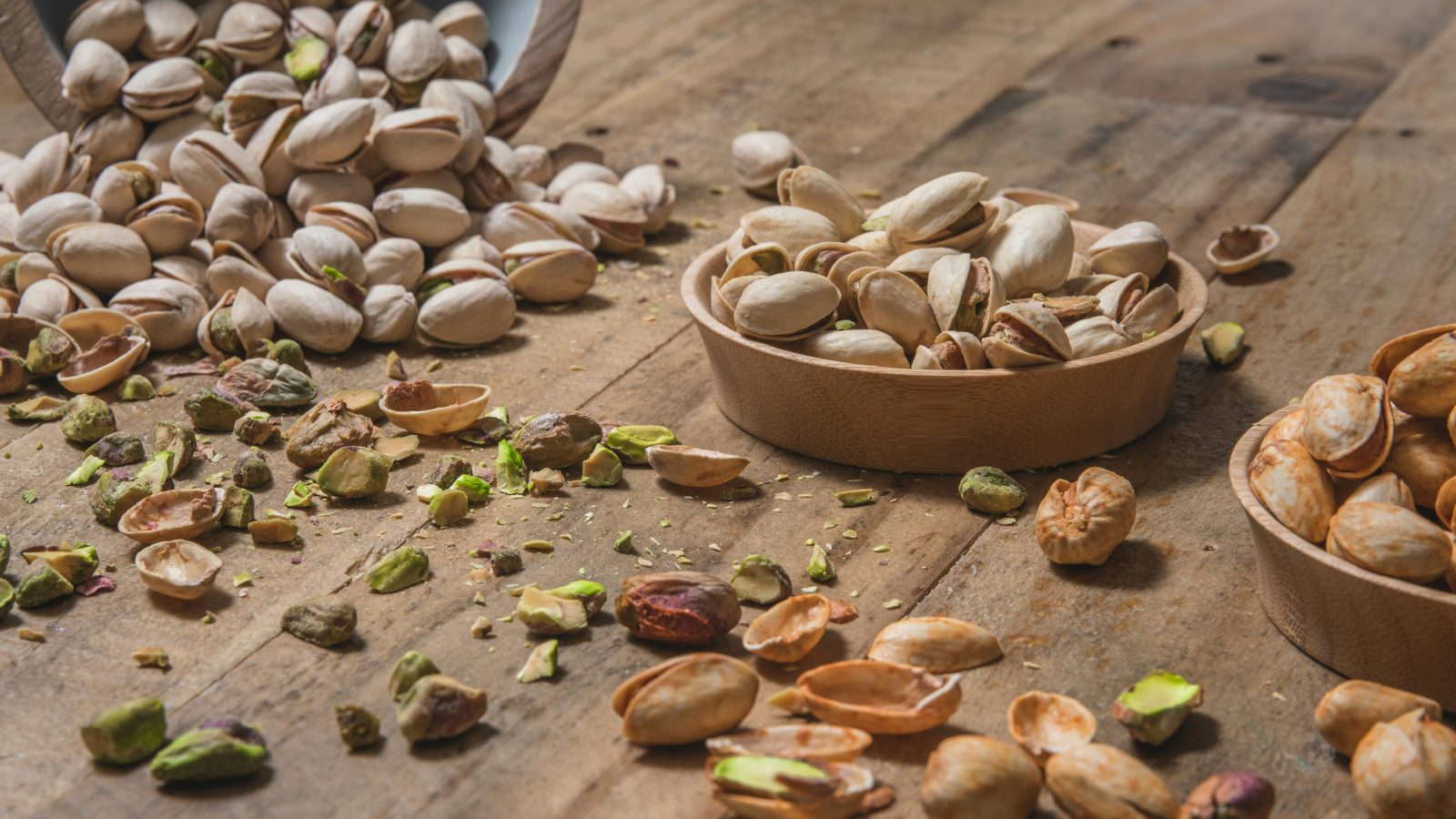
Pistachio and cardamom make particularly natural companions: pistachio gives the cake richness, texture and that beautiful green crumb, while cardamom provides warmth beneath the floral character of the rose. The important word, however, is restraint, because rose and cardamom are both capable of taking over completely, and combining excessive quantities of both can produce something that tastes more like perfume than cake. This recipe is intended to avoid that, so the cake should taste first of pistachio, butter and almond, followed by cardamom and then a gentle rose fragrance that becomes more apparent in the syrup and as the cake cools. Like the lavender biscuits, this is unapologetically cake: it contains butter and sugar because those ingredients belong here, and I see no reason to make a beautiful rose and pistachio cake only to spend the rest of the recipe apologising for it.
Makes
One 20 cm cake, 10 to 12 slices
Bake
40 to 50 min at 170°C (150°C fan)
Best
Room temperature, rested a few hours
Ingredients
For the cake
- 175 g unsalted butter, softened
- 175 g caster sugar
- 3 large eggs
- 125 g shelled unsalted pistachios
- 75 g ground almonds
- 100 g plain flour
- 1½ tsp baking powder
- ½ tsp ground cardamom
- ¼ tsp fine sea salt
- 2 tbsp whole milk
- 1 tsp culinary rose water
For the rose syrup and to finish
- 50 g caster sugar
- 50 ml water
- 1 to 2 tsp culinary rose water, according to strength
- 25 g pistachios, roughly chopped
- A small scattering of food-grade dried rose petals
Method
-
Prepare the pistachios
Heat the oven to 170°C conventional or 150°C fan and grease and line the base of a 20 cm round tin. Pulse the 125 g pistachios in a food processor until finely ground, stopping before they become a paste; some slightly larger pieces are welcome because they make the crumb more interesting, but most of the nuts should have the texture of coarse ground almonds. I would rather let the natural green of the pistachios and the rose petals provide the visual identity than rely on colouring, because the cake does not need to be pink in order to taste of roses.
-
Make the cake and bake
Beat the softened butter and caster sugar together until pale, creamy and noticeably lighter, then add the eggs one at a time, beating well after each and incorporating a spoonful of the flour if the mixture begins to separate. In another bowl, combine the ground pistachios, almonds, flour, baking powder, cardamom and salt, and fold these gradually into the butter mixture, followed by the milk and one teaspoon of rose water. Rose waters vary enormously in concentration, so caution is worthwhile: you can always add a little more through the syrup, whereas removing it from an already perfumed cake is rather more difficult. Transfer to the tin, level the surface and bake for about 40 to 50 minutes, until golden, beginning to pull slightly from the edge and a skewer inserted into the centre emerges without wet batter.
-
Make the syrup and soak
While the cake bakes, warm the sugar and water in a small pan until the sugar has dissolved, simmer briefly, then remove from the heat and let it cool slightly before adding the rose water, beginning with one teaspoon and tasting before adding more; the syrup should smell distinctly floral without becoming overpowering. When the cake comes out of the oven, leave it in the tin for about ten minutes before making several small holes across the surface with a fine skewer, then spoon the warm syrup gradually over the cake, allowing each addition to absorb before the next. Scatter the chopped pistachios and a restrained quantity of rose petals across the top.
Let it settle
This is one of those cakes that benefits from patience, because the flavour immediately after baking is not quite the same as it will be several hours later, once the syrup has moved through the crumb and the rose, cardamom and pistachio have had time to settle together. Serve it at room temperature rather than refrigerator-cold; it requires neither buttercream nor a thick layer of icing, because the syrup provides enough moisture and sweetness on its own. A spoonful of thick yoghurt or creme fraiche works beautifully alongside it if you want something creamy to contrast with the sweetness, although a plain slice beside tea or coffee is probably how I would most often eat it.
A note on rose water
Rose water deserves the same restraint as dried lavender: the objective is to create something that tastes of a flower without making the person eating it feel as though they have accidentally swallowed perfume. Always use culinary rose water, and remember that concentration differs significantly between products, so a teaspoon from one bottle can be considerably stronger than a tablespoon from another; adjust by taste and aroma rather than following blindly. The same applies to decorative petals: use roses specifically sold as food-grade ingredients rather than assuming petals from a florist are suitable for eating, as ornamental flowers may have been treated with products not intended for food crops.
Rose belongs in the kitchen
Perhaps the nicest thing about cooking with rose is the reminder that our modern categories for plants are surprisingly narrow. We encounter rose as a garden flower, perfume material, skincare ingredient or romantic symbol and can easily forget that, across other cultures and periods, it has also been an ordinary culinary ingredient, and putting rose water into a cake reconnects those identities. The flower on the table and the ingredient in the bottle come from the same botanical story, even though generations of cultivation and processing lie between them, and that is precisely the territory the Botanical Kitchen wants to explore: not the invention of supposedly medicinal recipes, but the much more interesting ways in which people have always brought plants into everyday life. Sometimes that means an infusion or a bowl of porridge, sometimes it means preserving an impossibly sour orange berry, and sometimes it means cake. There is room for all three.