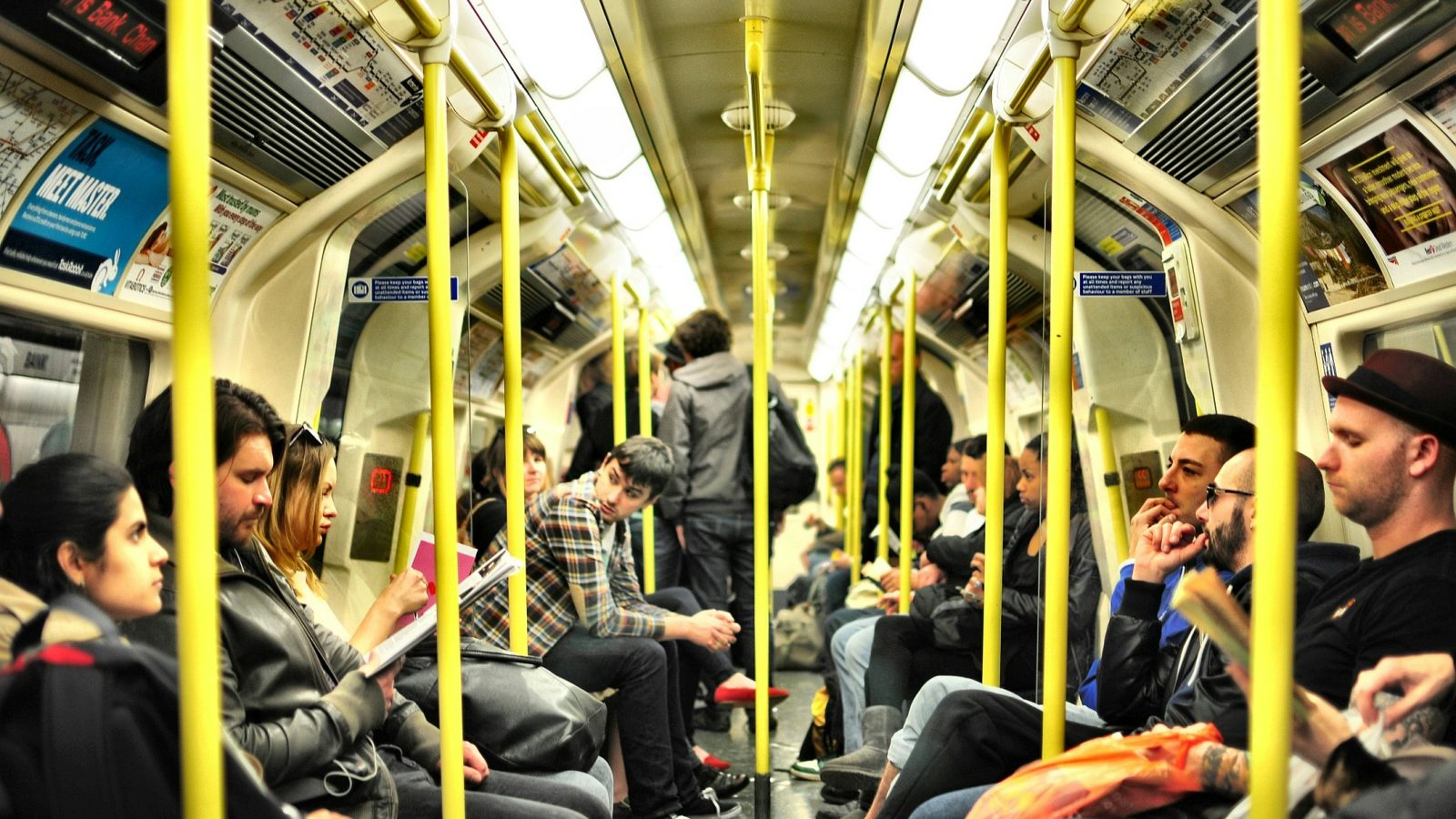
Before the pandemic, I commuted from Surrey into Waterloo five days a week. Like thousands of other people, I became very good at the mechanics of commuting: which carriage to board, where to stand, when to leave the house, how quickly I could get through the barriers at Waterloo and into the current of people heading for work. What I am less certain I ever learned was how to use the journey itself. Now that more of us are splitting the week between home and office again, I have been wondering what I would do differently.
Almost everything written about commuting starts from the same assumption: that the time is dead time, and the job is to fill it more productively. Answer emails. Get ahead on Slack. Listen to something “improving.” I want to take the opposite position. Unless you are actually being paid for that hour, it is not your employer’s time. It is yours, twice a day, and it has been sitting there unused for as long as most of us have been commuting. The question worth asking is not how to squeeze more work into it, but what it would mean to arrive better, at the office in the morning and at home in the evening, rather than simply arrive.
Don’t automatically give the train to your employer
This is close to the whole argument. The moment you sit down and open email or Teams before the working day has technically started, the train stops being a boundary and becomes an unpaid extension of the office. A commute is one of the very few remaining points in a working day with a genuinely hard edge either side of it, home at one end, work at the other, and that edge is worth protecting rather than dissolving. If you are not contracted or paid to work during the journey, treating it as work anyway is a choice, not an obligation, however normal it has come to feel.
A tiny ritual at both ends
Nothing conspicuous is needed here. Phone away, headphones on, a few slow breaths, and a conscious, private acknowledgement: home is finished, I am going to work. On the return journey, run it in reverse. This is mindfulness without ever having to call it that or do anything that looks like meditation on the 07:12, and it works because it is a deliberate boundary ritual rather than a technique, a small, repeatable signal to your own nervous system that one part of the day has ended and another is beginning.
A scent that is only yours
This is a very Botanicals suggestion, and it comes with an immediate caveat: not spraying essential oils around a railway carriage, your fellow passengers did not consent to aromatherapy, and shared, enclosed spaces are exactly the wrong place for it. Instead, something personal and private: a scented hand cream, a pulse-point balm, or a scent on a handkerchief tucked in a pocket, something only you can smell, applied at the same point in the journey each time. The point is not that a particular oil magically dissolves commuting stress, no single ingredient does that, but that scent is one of the most reliable, low-effort ways to build association and ritual around a repeated moment, the same principle behind lighting a candle for an evening wind-down or reaching for a particular oil before a massage.
Two minutes for your hands
A small hand cream and a genuinely deliberate one-minute hand massage, thumb working into the opposite palm, a slow press along each finger, is practical, discreet, and does not require anywhere to sit that is not already a train seat. It also happens to be one of the more sensorially rich parts of the body to pay attention to, dense with nerve endings relative to its size, which makes even a short, attentive massage feel disproportionately calming for the time it takes. If self-massage as a category interests you beyond the hands, we have written a fuller guide to the different styles and what the evidence actually supports.
Journal · Living Well
A Guide to Different Massage Styles
Where a hand massage sits alongside Indian head massage, myofascial release and the rest of what we cover.
Learn to look out of the bloody window
You do not have to optimise every minute of a commute to make it worthwhile. Watch the landscape change. Notice the weather. Look at other people’s gardens. Watch a city assemble itself around you as the train gets closer to it. This is mindfulness that never needs the word attached to it, and it has genuine research behind it too: a meta-analysis of studies on viewing nature through windows found consistently positive effects across physiological, psychological and physical health measures, and separate workplace research has linked satisfaction with a natural view specifically to better concentration and mental wellbeing. A train window moving through changing scenery is, for these purposes, a considerably richer version of the same thing than a static office window ever could be.
Choose what fills your head, rather than letting an algorithm decide
A commute hands you hundreds of hours a year, and the honest failure mode is not wasting them, it is turning them into another obligation, another improving podcast queued up out of duty rather than curiosity. A more enjoyable approach is to have a rotating commuter subject rather than a fixed programme: one day something completely unrelated to work, evolutionary biology, a novel, a language app, a lecture on a subject you know nothing about, or simply silence. The specific choice matters less than the fact that you made it deliberately. A widely cited piece of consumer research from the University of Sussex’s Mindlab found that just six minutes of reading reduced measured stress levels by more than music, tea or a walk, a fun, frequently repeated finding worth treating as suggestive rather than as rigorously peer-reviewed as the evidence we hold ingredients to elsewhere in this Library, but a reasonable nudge towards a book over a feed regardless.
Sketch something nobody needs to see
A small sketchbook and a pencil are enough: a coffee cup, someone’s shoe, the seat in front of you, your own hand, a station roof, the view. Nobody needs to see it, and it does not need to be good. What it needs to be is a few minutes spent looking closely at something ordinary, which is a genuinely different mental activity from scrolling, checking, or replaying a meeting, and one that tends to leave people calmer rather than more wound up by the time they reach their stop.
The journey home is a different journey
This deserves its own section rather than a line at the end, because morning and evening commutes are doing different jobs and deserve different treatment. The morning commute is for preparing. The evening commute is for decompressing, and spending the entire return journey replaying the day’s meetings does neither particularly well. A useful compromise: allow the first ten minutes home to mentally close the working day properly, jot down tomorrow’s three priorities if it helps, and then consider work genuinely finished. After that, the novel, the music, the sketchbook, the window, whatever the outbound journey was for, in reverse. By the time you actually reach your front door, you have already started changing state, rather than arriving home still fully switched on and needing another hour to properly stop. If you want a longer, more deliberate version of this same principle applied to the actual end of the day rather than the journey towards it, we have written about that too.
Journal · Living Well
My Sunday Evening Restorative Yoga Ritual
The same “prepare versus decompress” principle, taken further, for the transition out of a hectic week rather than a single working day.
A small kit, not a big one
Not a giant wellness bag. Just a handful of useful things, small enough to live permanently in whatever you already carry: a small notebook and pencil, headphones, water, a small hand cream, lip balm, a personal fragrance, tea or an infusion in a flask, and a book or e-reader. The point of a kit this size is that it removes the friction of deciding, each morning, whether any of this is worth bothering with. It is already there.
What this is not
The conclusion here is deliberately not “use your commute efficiently,” because that framing is exactly the trap this whole approach is trying to get out from under. You do not need to improve yourself for the entire journey. Sometimes using the time well means reading. Sometimes it means learning something with no application to your job at all. Sometimes it means closing your eyes and listening to music. And sometimes, genuinely, it means looking out of the window and thinking about nothing in particular. None of that needs justifying with a productivity outcome to have been worth doing.
Frequently asked questions
How can I relax on my train commute without meditating?
A short, private boundary ritual, phone away, headphones on, a few slow breaths and a conscious “home is finished” moment, achieves much of what a formal meditation practice would, without requiring you to sit cross-legged or do anything visible to other passengers. Looking out of the window at changing scenery works similarly, and has genuine research behind it as a restorative, attention-refreshing activity.
Is it bad to check work emails on the train?
Not inherently, but doing it automatically, every journey, without deciding to, quietly turns unpaid travel time into an extension of the working day. Unless you are specifically paid or contracted for that time, treating the commute as a genuine boundary between home and work, rather than a grey area, tends to leave people feeling less permanently “on.”
What should be in a commuter self-care kit?
A handful of small, genuinely useful things rather than a large wellness bag: a small notebook and pencil, headphones, water, a small hand cream, lip balm, a personal fragrance, tea or an infusion in a flask, and a book or e-reader. The value is in having them already there, removing any daily decision about whether to bother.
What is a good alternative to scrolling on your phone during a commute?
Reading something with no connection to work, sketching an ordinary object nearby, listening to a chosen podcast, audiobook or piece of music rather than an algorithmic feed, or simply looking out of the window are all genuinely different mental activities from scrolling, and tend to leave people calmer rather than more depleted by the end of the journey.
Should my morning and evening commute be treated differently?
Yes, and treating them the same is a missed opportunity. A morning commute is well suited to preparing for the day ahead; an evening commute is better used decompressing from it, with perhaps the first ten minutes allowed for consciously closing out work, tomorrow’s priorities jotted down if useful, before deliberately switching to something unrelated to the job for the rest of the journey home.
References
- Health benefits of viewing nature through windows: a meta-analysis. BioScience (2025). Oxford Academic
- Lewis, D. (2009). Reading and stress reduction research, Mindlab International, University of Sussex. Widely reported consumer research rather than a peer-reviewed clinical trial; treated here as suggestive, not definitive.