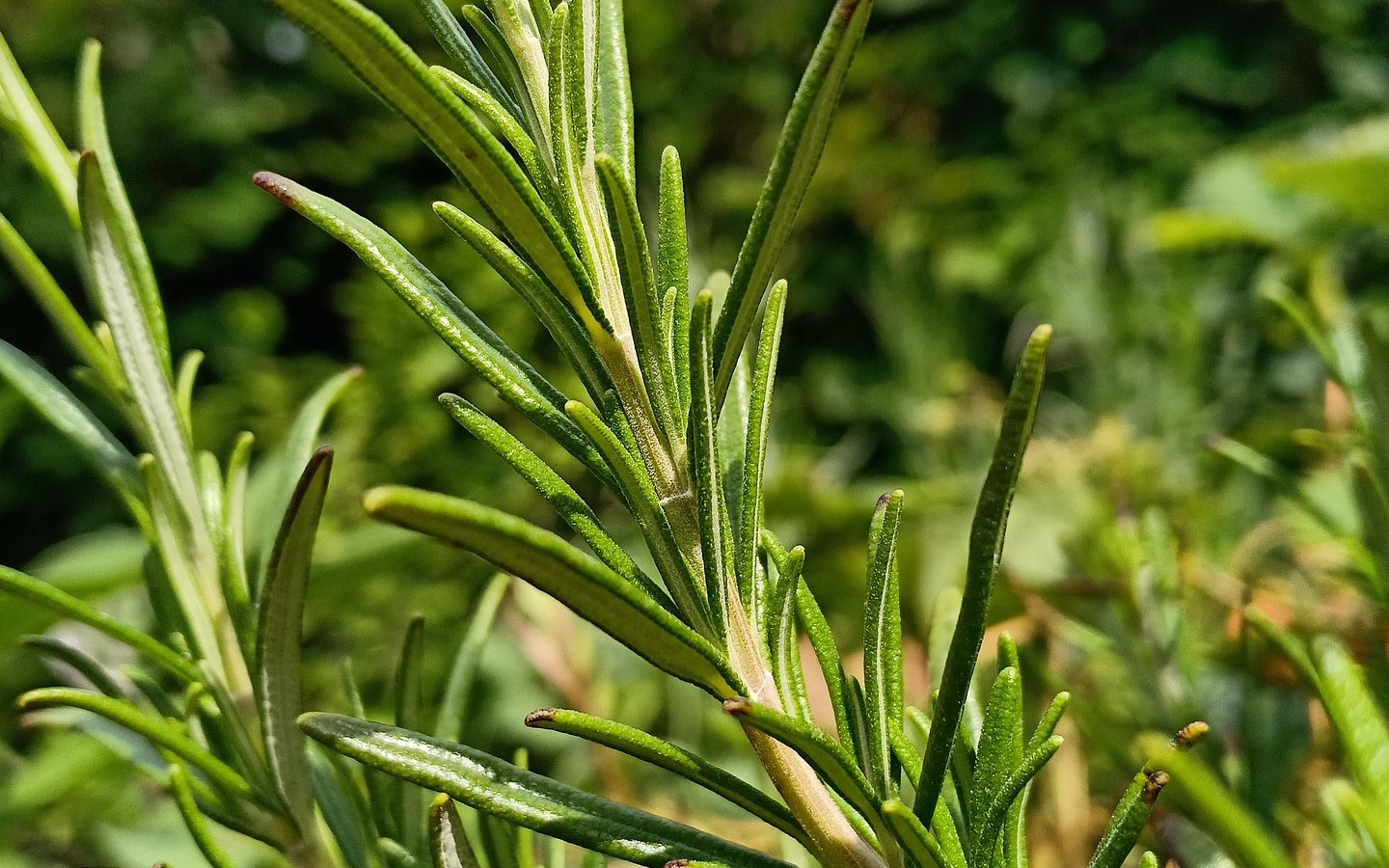
No other common culinary herb carries quite so consistent a reputation across so many centuries and cultures as rosemary’s association with memory. That folklore, examined in full in our Botanical Archives, turns out to have a genuinely broader modern evidence base behind it than most botanical legends manage, extending well beyond memory into hair, skin and general antioxidant chemistry. This monograph sets out that evidence in full, section by section, and is considerably more specific than the folklore about what each application can and cannot currently claim.
At a glance
| Botanical name | Salvia rosmarinus Spenn. (syn. Rosmarinus officinalis L.) |
|---|---|
| Common names | Rosemary |
| Family | Lamiaceae |
| Native range | Mediterranean coastal regions |
| Plant type | Evergreen perennial shrub |
| Principal parts used | Leaves and flowering tops |
| Main ingredient forms | Fresh and dried leaf, steam-distilled essential oil, CO2 extract, hydrosol, standardised leaf extract |
| Principal constituents | 1,8-cineole, camphor, alpha-pinene, borneol and verbenone (volatile fraction); rosmarinic acid and carnosic acid (non-volatile antioxidant fraction) |
| Traditional uses | Culinary herb, symbolic association with memory and remembrance, traditional hair and scalp care |
| Evidence position | Genuine human evidence for cognitive performance and hair growth (comparative trial); encouraging but largely preclinical evidence for skin |
| Principal safety consideration | Camphor content means concentrated preparations are contraindicated in epilepsy and pregnancy; case reports of seizure with topical use exist |
| Botanical Library | Monograph No. 007 |
Rosemary: the herb that never really left
Some botanicals in this Library disappeared from ordinary use for centuries before a modern rediscovery. Rosemary never really left. It has remained in continuous cultivation and use, in Mediterranean kitchens, in European gardens and eventually far beyond both, more or less without interruption from the ancient world to the present day. Its centuries-old association with memory, examined in detail in our Botanical Archives, is one of the rarer cases of long-standing folklore pointing towards a real, if still-developing, avenue of modern research.
Botanical identity
Salvia rosmarinus belongs to Lamiaceae, the mint family, and was reclassified from its own genus, Rosmarinus, into the genus Salvia in 2017, following molecular phylogenetic work demonstrating that the traditional genus Rosmarinus sat nested within Salvia rather than separate from it. Rosmarinus officinalis remains an accepted and extremely widely used synonym, and both names refer to the same plant; this monograph uses Salvia rosmarinus as the currently accepted name while noting that Rosmarinus officinalis continues to appear on the overwhelming majority of ingredient labels, packaging and existing literature.
It is an evergreen, woody perennial shrub, native to the rocky, sun-baked coastlines of the Mediterranean, where it grows well with little more than sea spray, poor soil and full sun, a genuine indicator plant for dry, well-drained, exposed conditions. The name itself is generally understood to derive from the Latin ros marinus, dew of the sea, a reference to that coastal habitat. Its narrow, needle-like leaves, dark green above and pale beneath, are a distinctive adaptation to conserve moisture in an arid environment, and the whole plant is densely covered in the small glandular structures responsible for its concentrated aromatic oil.
History and traditional uses
Rosemary’s association with memory is old enough that its precise origins are difficult to pin down with certainty. A frequently repeated story holds that ancient Greek students wore garlands of rosemary while studying, in the belief that it would sharpen memory and concentration, a charming and widely told story that belongs more properly to enduring popular tradition than to a single verifiable classical source. What is considerably better documented is how firmly that association had embedded itself into English and European culture by the early modern period, most famously in Shakespeare’s Hamlet, where Ophelia hands out rosemary “for remembrance.”
Rosemary also occupies a significant place in the early history of perfumery through Hungary Water, a rosemary-based, alcohol-distilled preparation generally dated to around the fourteenth century and often described as one of the earliest alcohol-based perfumed preparations in European history, an early, documented step towards the modern perfume industry. Alongside its symbolic and perfumery roles, rosemary has a long, continuous history as a culinary herb across Mediterranean cooking and as a traditional ingredient in hair and scalp preparations, generally applied as an infused oil or rinse, well before any of the modern clinical trials described below existed.
Ingredient forms
What a formulator or cook actually receives as “rosemary” varies considerably depending on processing, and the differences matter for interpreting the evidence that follows.
Fresh and dried leaf. The most familiar culinary form, and the basis of traditional infused rosemary oils and rinses; contains the full spectrum of the plant’s volatile and non-volatile compounds, but at low, variable concentration.
Essential oil. Produced by steam distillation of the leaves and flowering tops, concentrating the volatile aromatic fraction, 1,8-cineole, camphor, alpha-pinene, borneol and verbenone among others, into a considerably more potent material. This is the form used in the majority of the cognitive-performance aroma research and in most cosmetic and haircare formulations discussed below.
CO2 extract and standardised leaf extract. Because rosemary’s antioxidant compounds, principally rosmarinic acid and carnosic acid, are non-volatile and not well captured by steam distillation, extraction routes such as supercritical CO2 or solvent extraction are used to produce concentrated, standardised antioxidant material, chemically distinct from the essential oil and used for a different purpose, principally antioxidant and preservative applications rather than fragrance.
Hydrosol. The aromatic water co-produced during steam distillation of the essential oil, considerably more dilute and gentler, commonly used as a facial mist or toner base.
As with several other ingredients in this Library, a single word, “rosemary,” can describe materials with meaningfully different chemical profiles and correspondingly different appropriate uses, and confusing the essential oil with a leaf extract, or either with the whole dried herb, is a genuine source of confused claims in cosmetic marketing.
Chemistry
Rosemary’s chemistry divides cleanly into two stories, much like black pepper’s elsewhere in this Library: a volatile aromatic fraction responsible for scent and much of the cognitive-performance research, and a non-volatile antioxidant fraction responsible for most of the skin-related interest.
The volatile fraction and chemotypes
Rosemary essential oil typically contains 90 to 95 percent monoterpenes and their derivatives, with 1,8-cineole, camphor, alpha-pinene, borneol, verbenone and camphene the principal constituents, alongside a smaller sesquiterpene fraction. Crucially, rosemary oil’s composition varies considerably by growing region and is generally described using three recognised chemotypes: the cineoliferum type, containing over 40 percent 1,8-cineole and typically associated with Morocco, Tunisia and parts of the eastern Mediterranean; the camphoriferum type, with roughly balanced 1,8-cineole, alpha-pinene and camphor, commonly associated with Spain and France; and the verbenoniferum type, containing over 15 percent verbenone. This is not a minor technicality. A rosemary oil’s chemotype materially changes both its safety profile, since camphor content is the principal safety concern discussed below, and which body of research is actually relevant to a given bottle.
The non-volatile antioxidant fraction
Separately from the essential oil, rosemary leaves contain rosmarinic acid and carnosic acid, along with related compounds including carnosol and ursolic acid, some of the most extensively studied natural antioxidants in food and cosmetic science. Carnosic acid in particular is valued for genuinely potent free-radical-scavenging activity, and rosemary extract standardised for these compounds is a long-established, widely used natural antioxidant in the food industry, used to slow oxidative rancidity in fats and oils, a use case with a considerably longer and more established evidence base than most of its cosmetic applications.
Evidence for cognition and mood
This is rosemary’s best-evidenced application, and the one genuinely distinct from most other aromatic botanicals in this Library. Current evidence: ★★★☆☆ Genuine human aroma-exposure evidence, mechanism still being worked out.
A foundational 2003 study exposed 144 healthy volunteers to ambient rosemary or lavender aroma, or no odour, during a standardised cognitive test battery, and found rosemary associated with improved overall quality of long-term memory and greater post-task alertness. A more mechanistically important 2012 follow-up went further: twenty volunteers performed demanding cognitive tasks in a rosemary-diffused cubicle, and had blood drawn afterwards to measure absorbed 1,8-cineole. Performance on the more demanding tasks correlated directly with how much 1,8-cineole had reached the bloodstream, a genuine dose-response relationship that moves this beyond a simple pleasant-smell-improves-mood effect and towards a testable pharmacological one. The leading proposed mechanism involves 1,8-cineole’s ability to inhibit acetylcholinesterase, the enzyme that breaks down acetylcholine, a neurotransmitter central to memory. We cover this evidence, its proposed mechanism and its honest limits, including the currently untested question of perimenopausal brain fog specifically, in a dedicated article.
Evidence for hair and scalp
Current evidence: ★★★☆☆ One genuine comparative human trial, mechanism still debated.
Rosemary is one of the few botanicals in this Library with a real, randomised, head-to-head human trial behind its hair-growth reputation rather than only preclinical or mechanistic evidence. A 2015 randomised comparative trial assigned 100 patients with androgenetic alopecia to either rosemary oil or minoxidil 2 percent, a licensed hair-loss treatment, for six months, and found both groups experienced a statistically significant increase in hair count, with no significant difference between the two treatments. This is a genuinely notable result, and it deserves an honest caveat alongside it: it is a single trial, comparative rather than placebo-controlled, meaning it demonstrates rosemary oil performed comparably to minoxidil rather than proving either treatment works better than no treatment at all in this specific trial design. The proposed mechanism, plausible but not definitively established, involves rosemary’s vasodilatory and antioxidant properties improving scalp microcirculation, broadly analogous to minoxidil’s own mechanism.
Evidence for skin
Current evidence: ★★☆☆☆ Encouraging laboratory and cell-based work, little direct human clinical evidence for finished cosmetic products.
Antioxidant activity
Rosemary’s carnosic acid and rosmarinic acid are genuinely potent antioxidants in laboratory testing, with well-documented free-radical-scavenging activity relevant in principle to the oxidative stress implicated in skin ageing. This laboratory antioxidant strength is one of the better-established parts of rosemary’s cosmetic story, though it is worth noting that demonstrating antioxidant activity in a test tube is a different, lower evidentiary bar than demonstrating a measurable anti-ageing effect on human skin in a controlled clinical trial, which remains comparatively thin for rosemary specifically.
Antimicrobial activity relevant to acne
Laboratory research has found rosemary essential oil directly inhibits Propionibacterium acnes (now generally reclassified as Cutibacterium acnes), the bacterium implicated in acne, with one study using atomic force microscopy to show visible disruption of the bacterium’s cell wall and structure after exposure. Separately, rosemary leaf extract has been shown to suppress several inflammatory markers induced by the same bacterium in cell-based testing. Together these findings are a genuinely plausible mechanistic basis for rosemary’s use in blemish-prone skincare, but they remain laboratory and cell-based findings rather than clinical trials demonstrating that a finished rosemary-containing product clears acne in real-world use.
What the evidence does not support
Rosemary’s genuinely interesting laboratory and mechanistic story has generated cosmetic and wellness claims that outrun what has actually been demonstrated, and it is worth separating those out clearly.
Rosemary is not a proven treatment for perimenopausal brain fog specifically. The general cognitive-performance mechanism is plausible and does not depend on the underlying cause of cognitive symptoms, which is a reasonable basis for trying it, but no trial has directly tested rosemary aroma or 1,8-cineole in perimenopausal women with brain fog, and this remains an honest extrapolation rather than a demonstrated result.
Rosemary is not a demonstrated treatment for diagnosed cognitive impairment or dementia. Preclinical, animal-model research into 1,8-cineole’s effects on Alzheimer’s-related pathology is encouraging but remains at an early, non-clinical stage, and nothing in the current human aroma-exposure evidence supports using rosemary in place of appropriate medical assessment or treatment for cognitive decline.
Rosemary oil’s comparable performance to minoxidil in one trial does not mean it works via an identical, fully understood mechanism, or that it will outperform minoxidil, which has a considerably larger body of supporting trials behind it overall. It means one well-designed comparative trial found no statistically significant difference between the two in that specific study.
Rosemary’s antimicrobial and antioxidant laboratory findings for skin are not the same as a demonstrated clinical benefit for acne or skin ageing from a finished cosmetic product, which would require considerably more direct human trial evidence than currently exists.
Safety, contraindications and regulatory considerations
Rosemary essential oil is generally well tolerated in appropriately diluted cosmetic and aromatherapy use, but its camphor content, which varies considerably by chemotype, makes it one of the more genuinely important botanicals in this Library to handle with specific caution rather than blanket reassurance.
Camphor is a recognised convulsant compound, and case reports exist of breakthrough seizures occurring in people with a prior history of epilepsy following topical, aromatherapy-level use of rosemary-containing products, including a documented case following a massage with a rosemary-containing blend in a patient who had been seizure-free for eight years. Current safety guidance treats rosemary essential oil, particularly higher-camphor camphoriferum-type oils, as contraindicated or requiring specific caution in individuals with epilepsy or a seizure disorder. Rosemary essential oil is also generally advised against during pregnancy, owing to its traditional and pharmacological association with uterine stimulation, and rosemary is best avoided as a concentrated topical or internal preparation around young children.
Beyond these specific contraindications, rosemary essential oil can cause skin irritation or allergic contact dermatitis in susceptible individuals at higher concentrations, and general dilution guidance for leave-on cosmetic use typically recommends conservative percentages, well below the neat oil. Rosemary essential oil is not considered phototoxic. As with several oils in this Library, the honest safety position is chemotype-dependent rather than a single blanket figure: a verbenone- or cineole-dominant oil and a high-camphor oil are not interchangeable from a safety standpoint, and a reliable supplier should be able to confirm which chemotype a given batch represents.
Sustainability, cultivation and supply chain
Rosemary is a genuinely low-input crop by comparison with many botanicals in this Library. As a drought-tolerant Mediterranean shrub adapted to poor, rocky soil and minimal rainfall, it requires comparatively little irrigation or fertiliser input where grown in a climate suited to it, and it is widely cultivated across Spain, Morocco, Tunisia, France and other Mediterranean and near-Mediterranean regions, alongside more limited production further afield in similar dry, warm climates. Its long-established position as both a garden plant and a commercial crop means supply is generally stable and geographically diverse compared with botanicals reliant on a single narrow growing region.
The principal sourcing consideration for a formulator or brand is less about scarcity, since rosemary is neither rare nor endangered, and more about chemotype and processing transparency: confirming which chemotype a given batch of essential oil represents, and whether extraction was by steam distillation, for the aromatic fraction, or CO2/solvent extraction, for the antioxidant fraction, since these are genuinely different raw materials serving different purposes, as set out above.
Cosmetic formulation
Rosemary’s role in formulation splits along the same lines as its chemistry. As an aromatic ingredient, its essential oil brings a fresh, herbaceous, slightly camphoraceous top note that pairs naturally with other Mediterranean and woody materials, and works well in haircare formulations where its traditional scalp-care reputation and genuine comparative trial evidence both support its inclusion. As an antioxidant ingredient, standardised rosemary leaf extract, rich in carnosic and rosmarinic acid, is a well-established, naturally derived alternative to synthetic antioxidants for extending the shelf life of oil-based formulations, a use case with a genuinely long track record in both food and cosmetic manufacturing.
Given the chemotype-dependent camphor safety concern set out above, a formulator working with rosemary essential oil in a leave-on or massage product should confirm the chemotype of the specific batch being used and formulate dilution accordingly, rather than treating “rosemary oil” as a single, uniform raw material with one universal safe percentage.
Regulatory status, standards and quality assurance
Within the European Union, cosmetics containing rosemary essential oil or extracts are governed by Regulation (EC) No 1223/2009, requiring a documented safety assessment, a Product Information File and compliance with Good Manufacturing Practice under standards such as ISO 22716, alongside correct labelling of any recognised fragrance allergens present in a given batch. Standardised rosemary extract used specifically as an antioxidant is also permitted as a food additive in the EU under E392, subject to its own purity and specification requirements, a genuinely useful reminder that the same plant can sit under two entirely different regulatory frameworks depending on its intended use.
Given the chemotype variation described throughout this monograph, quality assurance for rosemary essential oil specifically should include chemotype confirmation, generally via gas chromatography, alongside standard identity and purity testing, since two bottles both correctly labelled “rosemary essential oil” can have meaningfully different camphor content and, correspondingly, different appropriate safe use levels.
Where I think rosemary fits
Rosemary is one of the more pleasantly surprising ingredients in this Library, precisely because its folklore reputation and its modern evidence base point in genuinely the same direction rather than diverging, which is not something I can say about every botanical with a centuries-old story attached to it. The cognitive-performance aroma research is real, dose-responsive, human evidence, not merely a pleasant-smell effect, and the hair-growth comparative trial against minoxidil is a genuinely rare thing in this Library: a proper head-to-head human trial rather than a cell-based or animal study standing in for one.
Would I formulate with it, and use it myself? Yes, on both counts, and I already do, in our twice-weekly hair oil ritual, where rosemary’s scalp-care reputation and genuine trial evidence both earn their place. I would be considerably more careful, though, treating the camphor-related safety guidance as a genuine, chemotype-dependent constraint rather than a boilerplate caution to skim past, and I would not extend rosemary’s real cognitive-performance evidence into an unproven claim about perimenopausal brain fog specifically, however plausible the underlying mechanism looks on paper. Rosemary does not need its evidence overstated to be one of the most interesting ingredients in this Library. What it has actually demonstrated is remarkable enough on its own.
Continue exploring
Botanical Archives · No. 007
Rosemary and the Memory of Remembrance
The centuries of folklore behind rosemary’s association with memory, from Ophelia to Hungary Water.
Journal · The Study
Rosemary and the Brain
The full neuroscience: what the aroma studies actually measured, the acetylcholine mechanism, and an honest look at the perimenopause question.
Botanical Rituals · No. 007
The Twice-Weekly Hair Oil
Rosemary’s scalp-care reputation, put into an actual weekly ritual.
Botanicals Kitchen
Rosemary Focaccia
Rosemary pushed deep into a slow-fermented dough, where the oven draws out its aroma far more effectively than any garnish.
Botanical Library · Monograph No. 001
Lavender, Lavandula angustifolia
Another aromatic Lamiaceae staple examined in full, including its own chemistry, safety profile and cosmetic evidence.
Disclaimer
The information contained within this monograph is provided solely for educational and informational purposes. Every effort has been made to ensure that the scientific information reflects the published evidence available at the time of writing, but botanical and cosmetic science continue to evolve. Nothing here should be interpreted as medical advice or a recommendation to diagnose, treat, cure or prevent any disease. Descriptions of laboratory antimicrobial, antioxidant or preclinical cognitive research are included to review the scientific literature and should not be interpreted as recommendations to use rosemary preparations therapeutically. Rosemary essential oil carries specific, genuine safety considerations relating to epilepsy and pregnancy, and concentrated preparations should be used only in appropriately diluted, professionally formulated products. Individuals who are pregnant, breastfeeding, have a history of seizures, are treating young children or are receiving medical treatment should seek qualified healthcare advice before using concentrated rosemary preparations.
References
The references below represent principal scientific and authoritative sources consulted during preparation of this monograph. Preference has been given to peer-reviewed research, comprehensive reviews, recognised botanical authorities and official regulatory or standards organisations.
Botanical taxonomy
- Royal Botanic Gardens, Kew. Plants of the World Online: Salvia rosmarinus Spenn. POWO taxon record
- Drew, B.T. et al. (2017). Salvia united: the greatest good for the greatest number. Taxon, 66(1), 133-145.
Chemistry and chemotypes
- Chemotypic characterization and biological activity of Rosmarinus officinalis. Frontiers in Bioscience. PMC5368539
Evidence for cognition
- Moss, M., Cook, J., Wesnes, K. & Duckett, P. (2003). Aromas of rosemary and lavender essential oils differentially affect cognition and mood in healthy adults. International Journal of Neuroscience, 113(1), 15-38. doi:10.1080/00207450390161903
- Moss, M. & Oliver, L. (2012). Plasma 1,8-cineole correlates with cognitive performance following exposure to rosemary essential oil aroma. Therapeutic Advances in Psychopharmacology, 2(3), 103-113. PMC3736918
Evidence for hair and scalp
- Panahi, Y., Taghizadeh, M., Marzony, E.T. & Sahebkar, A. (2015). Rosemary oil vs minoxidil 2% for the treatment of androgenetic alopecia: a randomized comparative trial. Skinmed, 13(1), 15-21. PubMed 25842469
Evidence for skin
- Fu, Y. et al. (2007). Investigation of antibacterial activity of rosemary essential oil against Propionibacterium acnes with atomic force microscopy. Planta Medica, 73(12), 1275-1280. PubMed 17893831
- Tsai, T.H. et al. (2013). Rosmarinus officinalis extract suppresses Propionibacterium acnes-induced inflammatory responses. Journal of Medicinal Food. PubMed 23514231
Safety
- Bozorg, A.M. & Benbadis, S.R. (2009). Essential oils as a cause of breakthrough seizure after temporal lobectomy. Seizure, 18(8), 604-605. Seizure journal
Regulation and quality
- Regulation (EC) No 1223/2009 on cosmetic products (consolidated version). EUR-Lex
- ISO 22716. Cosmetics, Good Manufacturing Practices (GMP). ISO catalogue
Further reading
- The clearest cognition evidence. The Moss and Oliver plasma-cineole study is the strongest single piece of dose-responsive human evidence for rosemary’s cognitive effects. Read the record →
- The hair-growth trial. The Panahi comparative trial against minoxidil remains rosemary’s single strongest piece of clinical evidence outside cognition. Read the record →
- The safety case worth reading in full. The temporal lobectomy seizure case report is a genuinely instructive, specific example of why chemotype and camphor content matter. Read the record →